Monday, 11 September 2017

The Patient Rise of Griselda

orangetrain

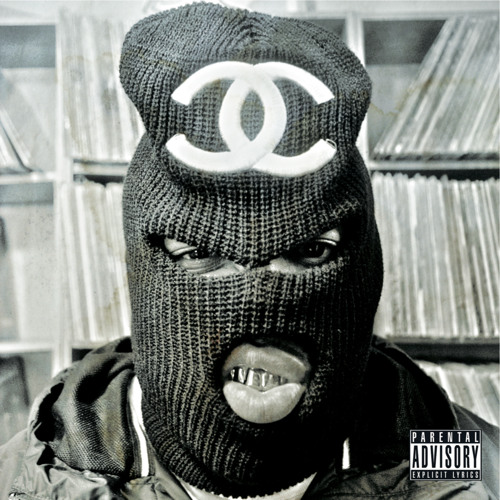
With the announcement this week of WESTSIDEDOOM, a collaborative EP from Westside Gunn and MF DOOM, the stock of Griselda Records continues to rise. Earlier this year, Conway and Westside Gunn – the highest profile members of Griselda (who happen to be brothers) – signed a distribution deal to Shady Records, Eminem and Paul Rosenberg’s label. In 2017, the two brothers from Buffalo, NY., are finally beginning to reap the rewards of years of hard work. It’s no surprise then that Griselda Records happens to share a name with the classical folklore tale of Griselda, made famous by Boccaccio and later Petrarch and Chaucer, titans of medieval literature.

In the traditional telling of the story, a young woman, Griselda, marries an important aristocratic man named Gaultieri, who cruelly tests her patience and obedience by subjecting her to an increasingly malicious series of lies. Gaultieri tests Griselda by declaring that she must give up her two children, who are to be put to death. Griselda gives up both of them without protest, but instead of murdering them, Gualtieri secretly sends them away to Bologna to be raised. Deciding this is not enough, Gaultieri raises the stakes higher, and declares to Griselda that he has been granted a papal dispensation to divorce her and marry a better woman. Once again, Griselda is obedient to his demands and returns to live with her father. Years later, Gualtieri chooses to remarry and demands Griselda to be a servant at his wedding. At the wedding he introduces her to a twelve year old, whom he claims is his wife to be, but who is actually their daughter. Griselda wishes them both happiness in their future, and at this final act of obedience, Gualtieri reveals that this fake bride is in fact Griselda’s child, and that she will be allowed to return to her place as mother and wife. If it somehow wasn’t blindingly clear, the story is disgustingly misogynistic, emphasising some of the worst aspects of patriarchal relations and male expectations of women. In Chaucer’s retelling in The Clerk’s Tale, although the story remains the same, the purpose behind the tale is subverted slightly from its patriarchal tradition. Chaucer writes:

“This storie is send nat for that wyves sholde
Folwen Grisilde as in humylitee,
For it were inportable, though they wolde,
But for that every wight, in his degree,
Sholde be constant in adversitee
As was Grisilde”


In essence, Chaucer commands the reader not to use the tale as a manual to follow, for to do so is frankly impossible, but that we should take from Griselda her strength, her constancy, in the face of adversity. Although, once again, this is not a particularly progressive message considering the immense emotional labour women in society are already placed under and the potential impact on mental health, it does poke at some related themes present in the music of Conway and Westside Gunn.

On ‘The Cow’, Conway reveals some of his own strength in the face of adversity. In a particularly moving verse from the Buffalo emcee, Conway remembers a late friend (Machine Gun Black) – “ask my baby momma how much I cried when Machine Gun died”. This is a move away from the usual blank face, cold bars that define their gritty aesthetic, a peek behind the curtain of unwavering emotional strength. Further on, Conway details his response to getting shot in the face – “You know what’s funny, I wanted to quit/ After I got shot in my head I seen my face like I’m done with this shit/ Trying to spit my verses and mumbling and shit/Face twisted up looking ugly and shit”. In a live performance earlier this year, Conway breaks down on stage at multiple points, overcome with emotion, it’s a poignant and painful reminder of the dangers of building up a Griselda persona.
This shedding back from the Griselda persona is rare for the two emcees though, who have built their reputation on the types of grimy, raw street raps that dominated the New York rap game in the mid-90s, and which have seen a renaissance of sorts in recent years with similar artists Ka, Roc Marciano and Your Old Droog. On ‘Mr. T’, Westside raps, “I’ma be fly forever if the stove work” and “If shit slow up, I’ma look prettier in the mask”, both times a pseudo-glorification of the street-drug dealer lifestyle is enacted. At other times the two emcees gloss over tragedies and tribulations with the bluntness of Griselda. “Empty out the Kel-Tec/ Til ain’t a shell left/ Bullets burn/ I can smell flesh/ I can smell death”. The opening bars to ‘1000 corpses’, where the horrorcore influence is clear, are phenomenal in crafting the image of a heartless killer, where the violence is so tangible that the listener can almost smell it too. A throwaway line on ‘Dunks’, Westside raps, “Learn your lesson, my man got 81 stressing”. This is not a plea for sympathy or a polemic on the state of the prison industrial complex, instead it’s a snippet of a story inside a story. An entire life tragically thrown away, that survives on in one line of a song, and yet Westside does not allow his icy mask to slip once.

If Griselda were named after the European folk tale, it’s an ingenious piece of aesthetic design, as the themes of that story seep into every aspect of their work. That patient, somewhat emotionally blunted approach to their lyricism, where the aesthetics of a drug deal or a murder or a car they drive define the whole song, bleeds out into everything they touch. Westside and Conway flow over beats in a manner that can, once again, best be described as patient. There’s no rushing to fit words into the beat count, every bar feels measured to mathematic precision, every word feels as though it has been painstakingly pondered over to paint the picture the song demands. Ironically, there has been little patience in the seemingly endless content they produce. Yet, within this irony exists the seed of another irony, they are patiently impatient, they are almost paradoxical in their output. It feels as though the two emcees could spend weeks writing a single verse, and yet for the past few years they have produced a whole stream of projects, mixtapes, features and singles. Conway’s debut label release, G.O.A.T, has been anticipated for some time, and yet it is not as though the rapper has been lacking in output. He has released projects with Prodigy, featured extensively on Benny and Westside’s works, and released his own mixtapes, including Reject on Steroids earlier this year. Still we clamour for more, we the listener become almost like Gualtieri, pressuring Griselda’s patience for more and more, testing the depth and range of their ability to see if it has a breaking point. So far, and with signs of the record label only ever-improving, Griselda hold strong. In rising in the rap game Griselda have been patient, not clamouring for commercial success, but ensuring a steady critical and professional acclaim that has seen their stock rise over the last few years. As they continue to reap the rewards of their hard work, it is now our turn to be patient towards their output as they continue to climb towards the top of the rap game.
Monday, 21 August 2017

A Look Back At: Clipse - Lord Willin'

orangetrain

Sometimes an easy way to understand an artists progression is through their album artwork. In two years and three albums 2Pac went from restrained and reflective on the cover of Me Against the World; brooding and proud on All Eyez On Me; and strung from a cross, martyred on his posthumous album The Don Killuminati: The 7 Day Theory. It’s an ice-clear example of the artistic and personal progression Pac rapidly underwent in this space of time, reflecting the searing highs and lows his life bounced between, before his tragic death. 

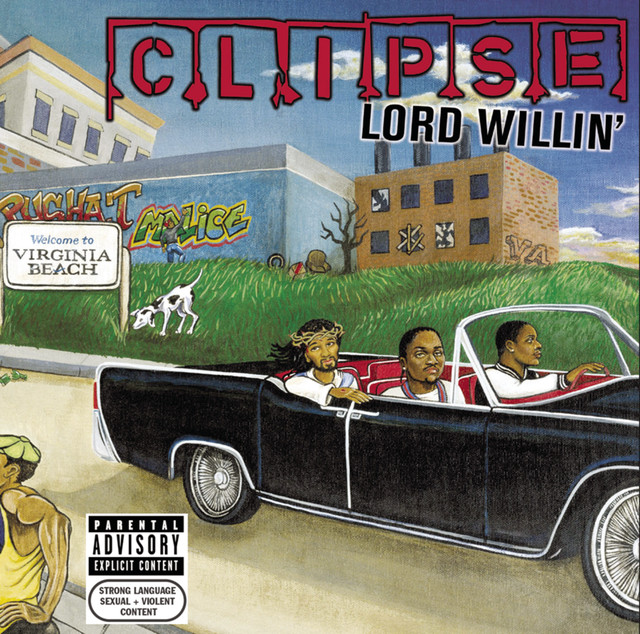
Another ice-clear example of artistic progression and change as reflected in their artwork is Virginia’s favourite brother-rapper duo Clipse, who 15 years ago released their classic debut Lord Willin’. The hand drawn, highly stylised cover is reminiscent of Snoop Dogg’s classic Doggystyle, it exudes cockiness and swagger with Pusha and Malice riding in a Cadillac with Jesus in the backseat. In the background a sign proudly displays their hometown, Virginia Beach – a prominent theme on the album - , as well as some hints towards the social realities of the area, with the two brothers contrasted against the dilapidated buildings behind them. It’s a far cry from the dead-eyed stares, crowned in front of a wall of money with nothing but an oven and a stove pot, that defines their second classic album Hell Hath No Fury. The music of Lord Willin’ is a far cry from HHNF as well, it’s the swagger and lyrical style of Jay-Z and Biggie with a Southern twist, compared to HHNF’s Prodigy and Scarface imbued violence and paranoia. It’s an album with a youthful vigour, without another four years of industry bullshit to weigh them down, without the encroaching religious conscience of Malice and without the even further encroaching fear of the DEA. 

This sense of a youthful playfulness is emblematised perfectly by The Neptunes production, which is full of playful trumpet loops, their signature piercing drums, soulful samples, Pharell’s infectious hooks and funky bass lines– it’s music to dance to; it’s hard not to find yourself grooving to Grindin’, Young Boy or Ma, I Don’t Love Her without ever planning to. For an album whose predominant theme is selling coke, it’s a roaring testament to the timeless quality of The Neptunes that Clipse were able to stretch across genre appeal – Justin Timberlake’s Grammy nominated Like I Love You being the defining moment of this. Some beats feel a little dated now, FamLay Freestyle and I’m Not You are weak moments, the heaviness of the electronic influence leaving little to be desired, but they’re not helped by consistently weak features throughout. If the album suffers from any weak points it is the features, that lack the wittiness of Pusha and Malice, and as such just feel like they’re taking up space that one of the two MCs could better fill on their own. The astonishing skill of Clipse lies in the perfect balance between Pusha and Malice, who mirror and work off of each other so perfectly that other MCs tend to feel like they’re spoiling the broth. 

On Young Boy Pusha and Malice share memories of growing up in Virginia, practicing “gangsta leans” at thirteen, witnessing coke being cooked at four, how their grandma was a woman not to be messed with. For a Conservative right-wing pundit, the stories told might be a horror story, the racist terrors of growing up poor and black. For Clipse, with the help of The Neptunes’ up tempo beat, these are fond memories, touchstones of their youth – perhaps not a ‘normal’ youth, but theirs nonetheless. On When the Last Time the boys boast about their exploits with women, Malice declaring “club nights…one of the reasons I love life” and Pusha ending the song defiantly – “I’m a winner, man”. Pusha declares himself a king in two games at one point on the album, and the sentiment rings true. After nearly a decade of record label struggle, these two brothers would catapult themselves to commercial and critical success, and it wouldn’t even be their only source of income (allegedly). If the album perhaps lacks a depth and variety of content, it’s difficult to hold it against them too much – Clipse came out the gates with a celebration lap; the confidence and delivery in their own self-worth is infectious, you can’t help but like them. 

Those dilapidated buildings that point to a degree of social realism are lightly alluded to on the track Virginia, which acts in a similar vein to the palate cleansing Murder Was Tha Case on Snoop’s classic debut. The hook reveals a bleak lack of opportunity in the community, Pusha bluntly explaining that “I’m from Virginia, where ain’t shit to do but cook”. Pusha seems to straddle the line between confidence and insecurity on the track, “Lost it all, from lives to love/But my faith and money helped me rise above”. The lifestyle that he owes so much of his success to, and so much of his confidence and swagger on the album, slowly starts to crack before the listeners eyes. Yet, Pusha and Malice are always in strict control of how much of their inner self they wish to reveal. The line, “I miss you Shampoo, We miss you Shampoo” offers a glimpse of emotional honesty otherwise absent on the album, before Pusha snatches it away with his wry sense of humour by following it up with “And your grams too…”. Malice’s verse similarly is slightly more autobiographical than elsewhere on the album, but he pulls back even harder when the armour starts to slip – “what I look like spending my nights in jail,/ I could never be a thug they don’t dress this well”. We can forgive him though, because he ends his verse with two of the hardest bars ever spit. In a month where various fascist and neo-Nazi groups have rallied against the removal of Confederate monuments, Malice offers a wonderfully ironic ode to the racist history of the American South. If you don’t know it, go and listen now. 

Lord Willin’ is an interesting album on reflection. It’s full of witty punchlines, clever metaphors, hard bars and braggadocio delivery, and The Neptunes offer a wonderful contrast with their upbeat, funky and soulful production playing off against their lyrical content. At times the album can feel a little sparse on content, that ferociousness they unleash on HHNF is still waiting to boil over, and their structure and penmanship still has a way to go. But what HHNF has in its unrivalled lyricism and thematic coherence, Lord Willin’ has in its Souther swagger, its gangsta lean that leaves you with a smile on your face and a tap in your step when you throw the album on and take a trip down memory lane. Each Clipse album, and each Pusha and Malice solo project, operates within a unique space in time – the two brothers wear there emotional state on their sleeves; with Lord Willin’ they were on top of the world – and sometimes happiness, confidence, swagger and so on is good, sometimes it can imbue its readers with this state of mind too. In the troubled waters that lie ahead for 2017, I think we could all do with a little more confidence and swagger. 


Wednesday, 19 July 2017

A Look Back At: Cousin Stizz – Monda

orangetrain


One week after Stizz released his third mixtape, One Night Only, I’ve decided it’s a perfect time to launch a new series, ‘A Look Back At’, and offer a retrospective on his warmly received 2016 effort Monda… I think there’s a reason I’m not a smash hit hip-hop writer.

Hailing from Boston, Stizz’s sophomore effort plays more like a late 90s regional Houston album than the work of an East Coast street star in the 21st century. The Houston comparison is perhaps not recognisable on a first glance, after all, the production is light years from that sound, dominated by producers Lee Rich, Tee Watt and M. Ali, and Dumdrumz, but it is rooted in the sensibilities of Southern trap music, with Memphis drums alongside a more recognisable contemporary Atlanta sound. Where the Houston comparison seems apt is in the structure of the album, alongside the lyrical style of Stizz, combined with his phenomenally relaxed flow that sounds as smooth as any other rapper out today.
       The title Monda is a reference to a late friend of Stizz’s, who sadly passed from cancer a few months before the release of the album. The cover of the album sees Stizz reflecting on his friend, who he has permanently memorialised with a tattoo on his left arm. It is this theme of reflection and loss that permeates the whole album, with Stizz’s new found success and the speed of change in his life, going like “500 horses”, creating the moment to remember the struggles and successes on his road to fame. The opening track sets this tone, Stizz reminding himself to not “take for granted anything I’m making while I’m here”, remembering how he used to stare at the “mountaintops” from the very bottom, a clear indicator for how far he knows he has come already. There is an understanding from Stizz also that even if he desired to leave the street lifestyle behind him entirely, he cannot simply cut the ties to his past. Stizz explains that “I still get calls like, “Bro, whatshisname just got killed””, and on ‘500 Horses’, the opening bars see Stizz’s first action when returning home to visit the “cemetery” and pay respect for his lost friends.
The past is not simply a painful reminder for Stizz, however, who raps that, “Yeah we struggle, but I kept my smile intact” and “Through the nonsense we was able to enjoy life through the process”. Stizz, from a rap perspective, is carrying the city of Boston on his back, and he will not shrug that responsibility off having found success. Growing up in Boston may have been difficult, but these difficulties are etched into his skin, they are not something Stizz shies away from, instead he embraces his past as defining the man he is today. The hook for ‘Big Fella’, “Young nigga grew into the big fella” pairs nicely with this couplet from the first verse, “Talkin’ bout a struggle you don’t know bout/That’s why it’s so easy for me to get these flows out”, to reflect the importance of his youth on his contemporary success.
In this pride Stizz displays towards his city, his past and the journey he has come on the comparison to 90s Houston rappers becomes apparent. In particular, Stizz displays a similar lyrical honesty to Fat Pat, both proudly representing the cities they come from, and the nuances of growing up within these places. Further still, Stizz shares Fat Pat’s characteristic buttery smooth flow and exceptional hook writing ability. Although he does not display the singing-rapping style prominent in the Screwed-Up-Clique, Stizz shares their DNA of authentic, sparse bars that paint a vivid picture of growing up poor and black in an urban environment, of beginning to achieve his “Ghetto Dreams”. The ability to jump between past and present, braggadocio and humbleness, and to weave between the two within words, lines and verses seems heavily inspired, again, by the Houston rap scene. UGK, Scarface, Bushwick Bill, 8Ball & MJG and the SUC all had an amazing ability to make you understand the conflicting realities in their lives, the sharp juxtapositions between abject poverty and grandiose success, between serious tragedy and deep joy, between humility and swagger. They made uncompromising hip-hop for their own communities, and in turn they helped to put both Houston and the South on hip-hop radars for ever.
     Today Houston is an established rap scene, with legends like Scarface and Z-Ro continuing to release strong efforts, whilst newer talent like Maxo Kream carry the flag for the next generation. Boston does not have this same rich tradition as Houston does, but with Stizz they have a poster child for a hip-hop movement that could add another city to an already rich map. With One Night Only Stizz appears to have taken another step towards this milestone,  featuring some of the biggest names in hip-hop, and creating a strong chance for a real breakthrough in 2018 with a would-be deserved spot on the XXL Freshman list. Stizz’s refusal to forget his past and his city will see both of them destined for great things in the future of hip-hop.

Friday, 16 June 2017

A Brief Look at Orientalism in Hip Hop

orangetrain

“The Orient was almost a European invention, and had been since antiquity ‘a place of romance, exotic beings, haunting memories and landscapes, remarkable experiences.”

“Taking the late eighteenth century as a very roughly defined starting point Orientalism can be discussed and analyzed as the corporate institution for dealing with the Orient- dealing with it by making statements about it, authorizing views of it, describing it, by teaching it settling it, ruling over it: in short, Orientalism as a Western style for dominating restructuring, and having authority over the Orient.”

These above quotes on Orientalism, taken from the seminal book of the same name by Edward Said, are perhaps difficult to place in the context of hip-hop as a genre. Hip-hop as a genre has historically provided a mouthpiece for (primarily) young black American males in a society defined by a white supremacist hierarchy that denied black people this basic right of free speech (amongst endless other human rights denied). In light of this, hip hop as a genre with the potentiality for black struggle against white oppression cannot actively engage in the “Western style for dominating, restructuring, and having authority over the Orient”, for black Americans lack the political hegemony to engage in this state-structured abuse. Hip-hop does have a problem with Orientalism, however, not in a structural state wide influencing level, but in an internal failure to recognise and combat regular acts of appropriation and stereotyping that engage in Orientalist behaviours. If hip hop is to continue to be a vehicle for social change and to challenge the current political hegemony, it must also challenge its own acceptance of Orientalist attitudes.

Said highlights that for American’s the Orient is far more likely to represent “the Far East (China and Japan mainly)”, as well as the increasing interventionist foreign policy in the Middle East during hip-hop’s brief lifespan having an impact on the varying examples of Orientalist behaviour present. What follows below is a by no means exhaustive list of examples of Orientalist attitudes within the genre.


“Every time I wanna go get a fuckin' brew
I gotta go down to the store with the two
Oriental one penny countin' motherfuckers
That make a nigga mad enough to cause a little ruckus”

- Ice Cube, Black Korea

“Like my man Muhammad from Afghanistan, grew up in Iran
The nigga runs a neighborhood newsstand
A wild Middle Eastern, bomb specialist
Initiated, at eleven to be a terrorist
He set bombs in bottles of champagne
And when niggas popped the cork, niggas lost half they brains”

- GZA, Hell’s Wind Staff/Killah Hills 10304

“Chinky-eye and snot-nosed”

- Method Man, Shadowboxin’

“Hey, me no worry, hashish keep my eyes Chinese”

- Nas, Suspect

“Goin' to Chi-land with them chinks (chinks)”

- Quavo, Get Right Witcha

“When I was a Geisha he was a Samurai
Somehow I understood him when he spoke Thai”

- Nicki Minaj, Your Love, https://youtu.be/pSFyrrhKj1Q

“Girl that pussy like medication to patients
Got my eyes closed, like Asian persuasion”

- Lil Wayne, Take it to the Head

“Yellow bitches, all of 'em swallow”

- Rick Ross, Bricks

“My aim is winnin, got Asian women that'll change my linen
After I done blazed and hit 'em”

- Puffy, D.I.D.D.Y.

“Eyes so low they probably think I'm asian”

- The Game, I’m the King

“Lost in my thoughts so my eyes be Asian”

- J.Cole, Back to the Topic (Freestyle)

“Still can't tell the difference
Just like Asians with their eyes shut”

- Tyler, the Creator, Burger

“And we hit the trees 'til we look like Vietnamese people”

- Eminem, Bad Meets Evil

“Something crazy and Asian, Virginia Tech”

- Childish Gambino, Backpackers

“So much heat you woulda thought it was the Middle East”

- MF DOOM, Rapp Snitch Knishes


With the exception of Ice Cube’s Black Korea, which exists within a particularly complex socio-political historical moment, the examples listed above are fairly typical examples of orientalist behaviour in Western culture – a mixture of cultural appropriation, ‘yellow peril’ language, a focus on “eyes”, racial slurs and cultural stereotypes. The examples in this list range from the most credited lyricists the genre has to offer (Nas and GZA) all the way to examples from earlier this year (Quavo), reflecting that these issues are not simply an issue of the past, but still deeply entrenched within the culture today. Whilst some might argue the likes of Kendrick and Wu Tang, in fact, celebrate the culture of the Far East, hip-hop has far more often been involved in a culture of ‘othering’, alienating listeners with a lazy approach to portraying people from the ‘Orient’ or of ‘Oriental’ heritage. Although there is a dedicated contingent of rappers who actively fight out against contemporary Orientalist presentations (be they Mos Def, Heems, Riz MC, Lowkey, Akala, Rich Chigga), the popular dynamic of Western culture is still to engage in behaviours that actively reinforce Orientalist perspectives. As a genre hip-hop continues to be an exceptional force for social change, and we must recognise that to fight white supremacy and imperialist agendas, it is necessary to engage in a culture that actively rejects the promotion of Orientalist language and behaviours.

Friday, 16 September 2016

Exploiting, Shaming and Saving: The Recurring Presentations of Sex Workers in Hip-Hop

orangetrain
This summary is not available. Please click here to view the post.